Did You Know Mushrooms…

Nutritional Information
By Forest Mushrooms

Mushrooms are low in calories, have no cholesterol and are virtually free of fat and sodium. Mushrooms also contain other essential minerals like Selenium, which works with Vitamin E to produce antioxidants that neutralize “free radicals” which can cause cell damage. Studies have suggested that selenium may reduce the risk of cancer, cardiovascular disease, may slow the progress of HIV disease and may aid in symptoms of rheumatoid arthritis, pancreatitis and asthma. Studies show men who eat selenium rich foods may lower their risk of prostate cancer.

—-

Potassium (good for the heart) is also found in mushrooms. It has been suggested a diet with potassium may help to reduce the risk of high blood pressure and stroke. Copper is another essential mineral found in mushrooms. Copper aids iron (also found in mushrooms) in making red blood cells and delivers oxygen to the body. Mushrooms also contain three B-complex vitamins; riboflavin for healthy skin and vision, niacin aids the digestive and nervous systems, and pantothenic acid helps with the nervous system and hormone production. These vitamins are found in every cell and help to release energy from fat, protein and carbohydrates in food. Vegetarians should know that mushrooms are one of the best sources of niacin. The vitamin content of mushrooms is actually similar to the vitamin content found in meat.

—-
The amino acid count in mushrooms is higher per serving than corn, peanuts, kidney and soy beans. The average mushroom is also high in protein and nucleic acid.


This article from the Channel4000.com website 3/4/02

Fungus-Based Meat Substitute Approved
Meat Alternative Popular in Europe

—-

WASHINGTON – A meat substitute made from fungus has been very popular in Europe, and now the Food and Drug Administration has approve it for sale in the United States. Known as mycoprotein, it’s marketed under the trade name Quorn. It can be made into such favorites as chicken-like nuggets, lasagna and fettuccine Alfredo. There’s even an alternative to ground beef, called “grounds.”

—-
Nutrition experts say it has a lot of protein and fiber, and few calories. Scientists found the fungus growing on farms near London in the ’60s and discovered that its long strands could mimic the fibrous tissue of meat. Now it’s mixed with egg and flavorings and fashioned into imitation meat.

—-
They say it has potential as long as the word “fungus” doesn’t appear on the label.


Facts

Fact: The first mushrooms were thought to be cultivated in Southeast Asia, but it is not known why for sure. It is possible that someone discovered that mushrooms grew by accident or perhaps there was a demand and someone sought out a growing method.*

Fact: Whether mushrooms are wild or cultivated they continue to grow after they are picked. People sometimes mistake a thin white material called mycelium for mold, but rest assured it probably is the mycelium growing!

Fact: French farmers grew garden beds in the 1700’s which ended up being too small and too expensive. They later moved their crops to caves created when the stone for building Paris was quarried – this is where the name champignon de Paris originated. American farmers followed the same method.*

Fact: While mushrooms are canned, pickled and frozen, drying mushrooms is the oldest and most commonly used way to preserve mushrooms.

Fact: Mushroom compost can range from being manure or wood based (sawdust, wood chips) to utilizing materials like cocoa bean or cotton seed hulls, brewers grains , even exotic items like banana leaves as substrate.

Fact: One Portabella mushroom generally has more potassium than a banana.

Fact: Mushrooms continue to gain popularity, especially the specialty mushrooms such as Portabella, wild Morels, Oysters and Shiitake. Mushrooms, particularly the Portbella are often used in place of meat in many dishes.

Fact: Commercial mushroom farming began in the early 20th century. Pennsylvania and California are the largest mushroom producers.

Fact: Mushroom “farms” are climate controlled buildings; airflow, temperature and light are all constantly monitored.

Fact: Wild mushrooms can range in price for reasons such as taste, historical significance and availability. European truffles can sell for over $1,600 per pound!

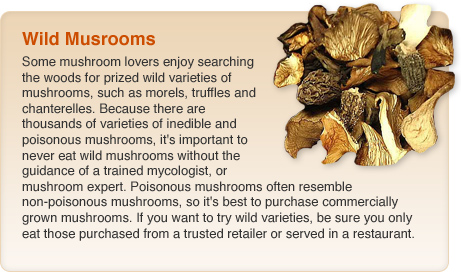
Fact: Wild mushrooms can be found in many wooded areas. If you do choose to harvest wild mushrooms, make certain you have a professional identify your pick. Many mushrooms may resemble safe mushrooms (they are called false mushrooms) and can be poisonous.

*Facts from The Edible Mushroom A Gourmet Cook’s Guide by Margaret Leibenstein

———-
There are about 300 species of edible mushrooms, but only about 10 that can be grown commercially.One serving of mushrooms is equivalent to 5 white mushrooms.One serving of mushrooms contains only 20 calories.

Mushrooms are nutrient dense containing a variety of antioxidants.

Kennett Square is the Mushroom Capital of the World and the state of Pennsylvania produces 65% of the US production.

September is National Mushroom Month.Mushrooms were first cultivated in the U.S. in the late 1800’s.The average consumer eats almost 4 pounds of mushrooms per year.

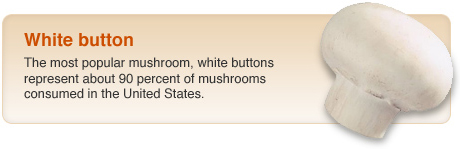
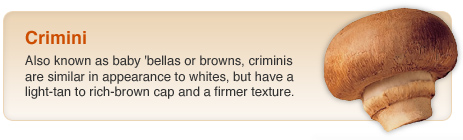
White mushrooms are the most popular mushroom followed by criminis.

Almost 90% of all consumers use mushrooms as an ingredient in recipes.

Mushrooms are the only natural fresh vegetable or fruit that contains Vitamin D.

———-

Did you know that the vitamins and minerals in mushrooms help protect our cells, strengthen our immune system and aid with digestion?

By Modern Mush

All that flavor and good for you too!
 People have been enjoying mushrooms for centuries because of the dynamic flavors they contribute to our meals. Now scientists are beginning to discover the health benefits mushrooms contribute as well. Here are some good reasons to include these healthy fungi in your diet.

It Does A Body Good
Filled with an array of vitamins and minerals mushrooms have positive antioxidant properties. These antioxidants protect our cells, strengthen our immune system, aid with digestion and energy production and helps the nervous system function properly.

Low in Fat
Additionally, a diet low in fat and high in fiber contained in fruits,vegetables, and mushrooms, may reduce the risk of some cancers like breast and prostate cancers.
———-

Did you know mushrooms will keep for 5 days?
Always refrigerate mushrooms and avoid airtight plastic bags because they will retain moisture and speed spoilage. Properly stored, fresh mushrooms will keep for five days or longer.

Buying
Look for firm, unblemished caps. The mushroom’s surface should be free from moisture but not look dry. Avoid mushrooms with any sign of mold.

Storing
 Always refrigerate mushrooms. Loose mushrooms keep well in paper bags in the refrigerator. Avoid airtight plastic bags because they will retain moisture and speed spoilage. Properly stored, fresh mushrooms will keep for five days or longer.

Cleaning
Don’t clean mushrooms until you are ready to use them. To remove any bits of the peat moss in which they were grown, rinse quickly with cold running water or wipe the mushrooms with a damp cloth, paper towel or soft brush.

Freezing
Uncooked fresh mushrooms don’t freeze very well, but once they have been cooked, they can be frozen in small containers for a convenient, ready to use addition to soups, stews and sauces. Just clean, trim and slice the mushrooms; saute them in oil or butter and cool to room temperature. Then, package in airtight 1/2-cup or 1-cup containers and freeze. They may be kept several months and are best if thawed in the refrigerator before use.

Using Dried Mushrooms

Dried mushrooms are available in gourmet stores and in some supermarkets. You might find chanterelles, porcini, morels, shiitake, woodear, lobster, black trumpet or mushroom mixtures. They should be stored in a cool, dry place. They are best used in small quantities to add flavor and intensity to sauces, soups and stews. Rehydrate them in warm water until they are soft before adding to other foods. The soaking liquid can add flavor as well, but should be strained before using to remove any sand or grit.

———-
By ARS USDA Gov.
~ Mushrooms have no chlorophyll (a green pigment in plants), so they don’t need sunshine to grow and thrive. Some of the earliest commercial mushroom farms were actually set up in caves in France during the reign of King Louis XIV (1638-1715).
~ One portabella mushroom has more potassium than a banana. White and crimini mushrooms are also good sources of potassium. Potassium helps the human body maintain normal heart rhythm, fluid balance, and muscle and nerve function.~ Grains and foods that come from animals are good sources of selenium. But in fresh produce, only mushrooms contain significant amounts of this mineral. Selenium plays an important role in the human immune system, the thyroid system, and the male reproductive system.~ Mushrooms are an excellent source of copper, a mineral that the body needs to produce red blood cells and for other functions.

~ Mushrooms have significant amounts of three B-complex vitamins: riboflavin (rye-bo-FLAY-vin), niacin (NYE-eh-sin), and pantothenic (pan-toe-THIN-ick) acid. The B vitamins help release energy from the fat, protein, and carbohydrates in food.

~ To keep mushrooms fresh, store them in a paper bag in the refrigerator. Avoid airtight containers that can collect moisture and cause them to spoil faster.

~ Consumption of mushrooms in the United States increased from 3.7 pounds per person in 1993 to 4.2 pounds per person in 2000.

~ Sales of the 2001-2002 U.S. mushroom crop totaled 851 million pounds, and consumers spent $912 million on them.

~ Truffles, or mushrooms that grow below the ground, are one of the world’s most expensive foods. One variety,Tuber melanosporum, can cost between $800 and $1,500 a pound.

~ The largest living organism ever found is a honey mushroom, Armillaria ostoyae. It covers 3.4 square miles of land in the Blue Mountains of eastern Oregon, and it’s still growing!

———-
Naming Species . . . or . . . What’s in aName?

To name the many thousands of different plants, animals, microbes, and other living things on Earth, scientists use the Linnean(le-NAY-in) classification system. It was developed by a Swedish biologist named Carl Linnaeus (le-NAY-us) in the mid-1700s.

In the Linnean system, species are referred to by two Latin names. For example, human beings are classified as Homo sapiens. The first word refers to the organism’s genus (Homo) and is called its generic name; the second word refers to the organism’s species (sapiens) and is called its specific name. The generic name begins with a capital letter, but the specific name doesn’t. Both names are usually written in italics.

A species is a set of organisms that can potentially mate and produce offspring. Members of a species tend to look more like each other, act more like each other, and share more genes with each other than they look like, act like, or share genes with members of other species.

Different species that share a large number of characteristics are gathered together into a group called a genus.

The Linnean system of classification is based on a hierarchy (or certain rank) and includes more than just genera (the plural of genus) and species. The hierarchy also includes families, orders, classes, phyla (called divisions if you’re talking about plants), and kingdoms.

For example, genera that share characteristics make up a family. Families that share characteristics make up an order. Orders that share characteristics make up a class. Classes that share characteristics make up a phylum, or a division if you’re talking about plants. And phyla (the plural of phylum) or divisions that share characteristics make up a kingdom.

There are five kingdoms in all: Protoctista (algae), Monera (bacteria), Fungi(mushrooms and mold), Plants, and Animals.

Some species, such as the fungus known as Trichoderma aggressivum, can be separated into even more specific groups, called forms. The green mold that attacked Pennsylvania mushrooms in the 1990s has been identified as having two forms: Trichoderma aggressivum f. aggressivum and Trichoderma aggressivum f. europaeum.

———-

What Are The Different Types Of Edible Mushrooms and How

Do You Use Them?

By Scarletquill99

Oyster mushrooms

Mushrooms

The spongy, delicately flavoured fungi delicacy that has sent people trampling through damp forests and fields/meadows for centuries in search of the perfect sponge-textured morsel for a myriad of recipes.
Mushrooms add an interesting flavour and texture to a variety of global cuisine, but one must be careful when selecting mushrooms for cooking, remedies or medicinal purposes because only about 3% of wild mushroom varieties are safe for human consumption.
More and more people are now starting to branch out and use different and exotic ingredients in their cooking at home and are starting to seek out different types of mushrooms for different purposes.
Pretty much everyone is familiar with the regular white “button” mushrooms that are easily found in cartons in the supermarket but if you look a little further there are a plethora of other wonderfully interesting varieties available with varying flavours and a variety of uses.  These ‘gourmet’ mushroom varieties can now be found in many better supermarkets and specialty grocery stores.  Now here’s some ideas about how to use them and get the most out of their unique flavor in your cooking…
———-
Enoki mushrooms

Enoki mushrooms

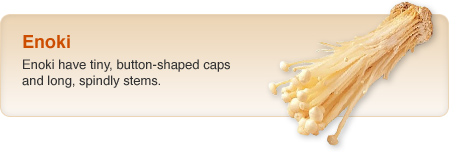
Also known as Enokitake are thin, long, white colored mushrooms that are most commonly used in Chinese, Japanese and Korean cuisine.
These mushrooms naturally grow on the stumps of the Chinese Hackberry tree, called enoki’ in Japanese, but also on some other trees such as mulberry and persimmon. In Chinese, the mushroom is called jīnzhēngū金針菇 or jīngū金菇. In Korean it is called paengi beoseot (팽이버섯) as is kim châm or trâm vàng in Vietnamese.
Wild forms of this mushroom that differ in colour, texture and slimness are called velvet stem or winter mushrooms.
These mushrooms are available fresh or canned and they are traditionally used for making soups but they have also become popular for use in other Asian dishes and even salads because they have such a crisp texture and interesting shape.
When you are picking out Enoki mushrooms in the grocery store or market, ensure that the stems/stalks are as white as you can find in color and firm to the touch. Avoid those with more brownish or slimy stalks. With this type of mushroom, there is a significant difference in appearance between the wild and the cultivated mushrooms.
Enoki mushrooms are known to be quite high in antioxindants. The stalk or the ‘golden needle’ also contains a large amount of protein.
—-
Species of this variety:
Flammulina callistosporioides
Flammulina elastica
Flammulina fennae
Flammulina ferrugineolutea
Flammulina mediterranea
Flammulina mexicana
Flammulina ononidis
Flammulina populicola
Flammulina rossica
Flammulina similis
Flammulina stratosa
Flammulina velutipes

—-

Truffles (fungus)
A truffle is the ‘fruiting body’ of an underground mushroom. The majority of truffles are ectomycorrhizal and are therefore generally found in close association with trees, particularly with the roots of tree species including poplar, beech, oak, birch, hornbeam, pine and hazel.
They do best in soils which are well-drained and either neutral or alkaline in nature and they fruit throughout the year and they can be found buried between the soil and the leaf litter.
—-
There are a few different types of truffles including:
—-
  • White truffle [Tuber magnatum] (aka “Alba madonna“) – found in Italy and Croatia)
  • Black truffle [Tuber melanosporum] (aka “black Périgord truffle”) – found in France, Spain, Italy, Croatia and the Australian states of Tasmania and Western Australia.
  • Chinese truffle [Tuber sinensis or Tuber indicum] – found in China and in small quantities in the Chinese Himalayas.
  • Summer truffle [Tuber aestivum/uncinatum] (aka black summer or burgundy truffle) – found across Europe.
  • Scorzone truffle [Tuber Aestivum]
Truffles are highly prized as a food and have often been called “the diamond of the kitchen”.
They are held in high esteem in French, Spanish, northern Italian and Greek cooking as well as in international haute cuisine.
Because of their high cost and extremely pungent taste, truffles are used very sparingly. Supplies can be found commercially as unadulterated fresh produce or preserved, typically in a light brine. A popular preserve today is known as ‘truffle oil’, made from the brine of truffles after they are harvested. It preserves the distinctive flavour of the truffle and makes it more widely available and easier to use as an oil form. Be careful though, as many commercially available ‘truffle oils’ do not actually contain real truffles, instead they are prepared using a substitute to recreate the flavour of truffles and are mostly olive oil.
White truffles are usually served raw, shaved over hot pasta or salads. White or black paper-thin truffle slices may be inserted into meats, under the skins of roasted fowl, in foie gras, pâtés, or stuffings. The flavour of black truffles is far less pungent and more refined than that of white truffles.

—-

Chanterelle mushrooms

Chanterelle mushrooms

Chanterelle mushrooms, also known as golden chanterelle, is a fungus.  It is funnel shaped, has a meaty texture and is usually yellow or orange in colour.  It has a fruity apricot scent and a mild, peppery taste.  Chanterelle are considered an excellent edible mushroom that is fantastic in many types of cooking.
They are commonly found in northern Europe, North America, Mexico, Asia (including the Himalayas) and many parts of Africa.  They tend to grow in clusters in mossy forests and birch forests as well as in grasses and low growing herbs.
Chanterelles are quite high in Vitamin C, extremely rich in potassium as well as being one of the richest sources of Vitamin D known to man.
As for their culinary use, there are records of chanterelles being eaten which date back to the 1500s. However, they first gained widespread recognition as a culinary delicacy with the spreading influence of French cuisine in the 1700s, when they started to appear in palace kitchens. For many years, they remained notable for being served at the tables of nobility. Nowadays, the usage of chanterelles in kitchens is common throughout Europe and North America.  For this reason, Chanterelles have come to be known “as one of the most important and best edible mushrooms”.

—-

Portobello or Portabella mushrooms

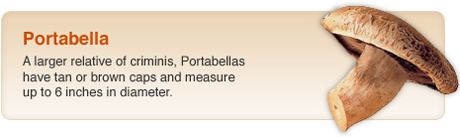
Portobello mushrooms, also known as portabella mushrooms, is native to the grasslands of Europe and North America. It is one of the most widely and commonly consumed mushroom varieties all over the world.
This type of mushroom, being so commonly used and available, is marketed differently depending on where you find it. Hence you will sometimes see it named as a crimini mushroom, a Swiss brown mushrooms, a Roman brown mushrooms, an Italian brown or simply an Italian mushroom.  What it is named is all dependent upon where you live and whether the particular mushroom is juvenile or not.   Also, a young specimen of this variety may be called a ‘button mushroom’ or a ‘baby portobello’.
But they are distinctive in their white/pale grey or sometimes slightly light brown flesh and domed shape and we have all become used to seeing them often served on pizzas, grilled or sauteed in pasta, oven roasted and so on, so they are not difficult to recognize when you are looking for them in the grocery store.
This variety of mushroom is cultivated in over 70 countries. They are also very high in Vitamin D, potassium and contain large amounts of antioxidants.

—-

Porcini / penny bun mushrooms

Porcini mushrooms

Porcini, penny bun or cep mushrooms, scientifically known as Boletus edulis, is a widely distributed edible mushroom found in North America, Asia and Europe.
It does not occur naturally in the Southern Hemisphere, although it has been introduced into southern Africa, Australia and New Zealand. It is commonly prepared in soups, pasta and risotto.
Stem shape of the porcini can range from club-shaped to centrally bulbous.  The Boletus edulis can grow singly or in small clusters of 2 or 3.  The mushroom tends to grow in areas dominated by pine.
It favours climates that are either cool or subtropical.  It is most common in Europe, North America and Mexico.

—-

Size can vary

Porcini tend to vary considerably in size depending on their maturity.

Shiitake mushrooms

Shiitake mushroom

Shiitake mushrooms

The Shiitake, or Lentinula edodes, (from the Japanese 椎茸、シイタケ) is an edible mushroom native to East Asia.  It is sometimes also known as the Black Forest mushroom.
It is harvested in and commonly consumed in many Asian countries and it is also dried and exported to many countries worldwide.
Shiitake mushrooms are a common ingredient found in Chinese, Vietnamese, Japanese, Korean and Thai cuisine.
In the Eastern cultures, the shiitake mushroom has long been considered a delicacy as well as a medicinal mushroom used for many purposes. They have been grown in China and Japan since prehistoric times with the oldest record regarding the shiitake mushroom dating back to AD 199 at the time of Emperor Chūai in Japan.
In Japan, Shiitake mushrooms are served in the popular miso soup and in Thailand they may be served either steamed or fried.

Morchella mushrooms

Morchella mushrooms

Morchella mushrooms

Morchella mushrooms (aka true morels or sponge mushrooms) are one of the most distinctive edible mushrooms in that they feature a unique honeycomb like look to them. The upper section features a complex pattern of ridges and pits.
They are prized by gourmet cooks, particularly by the French. morels are hunted by thousands of people every year simply for their taste and the joy of the hunt.
Yellow morels are most commonly found under deciduous trees, and black morels tend to favour oak and poplar trees.
Their unique flavor is prized by cooks worldwide, with recipes and preparation methods designed to highlight and preserve it. As with most edible mushrooms, they are best when harvested or bought fresh.

Oyster mushrooms

Oyster mushrooms

Oyster mushrooms

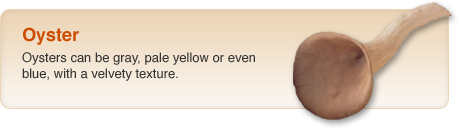
Pleurotus, more commonly known as oyster, abalone or tree mushrooms, are some of the most widely harvested and readily available mushrooms in the world.
They are found in both tropical and temperate climates globally and they are generally large mushrooms that are cream in color. They are generally found as white-rot fungi on hardwood trees or conifer wood.
They have been given the name oyster mushrooms because they often tend to resemble the shape of an oyster shell. They are also are a good source of niacin, thiamine and riboflavin, and also supply folate and dietary fibre.
When shopping for oyster mushrooms, look for mushrooms with firm, dry skin and make sure you store them in a paper bag close to the bottom of the fridge if you can. Before you prepare them, wipe off with a damp cloth (never wash them or soak them to clean because they will become waterlogged) and trim the ends. You can then slice them if that’s what your recipe requires.
  • For a quick and easy meal you can stir fry them with beef strips, garlic, ginger, any Asian greens you like and a dash of soy sauce to finish.
  • You can also stir them through Asian soups or stir-fry dishes near the end of cooking until they are just tender. They will liven up any Asian style meal with their unique flavour and texture.

Reishi – the most commonly used medicinal mushroom

Reishi mushrooms
Medicinal mushrooms are mushrooms or extracts from mushrooms “that are used or studied as possible treatments for diseases”.

Toadstools

Poisonous mushrooms, feared as ‘toadstools’ by past generations, have the power to kill a victim in under a week – sometimes in hours. They can often be identified by a cup at the bottom of the stem, called the volva.
———-

By Mushroom Chef

Mushroom Varieties

White Agaricus Mushrooms (Agaricus Bisporus)

–  Button
–  Cups
–  Flats
———-

Brown Agaricus Mushrooms (Agaricus Bisporus)

–  Portabella
–  Swiss Brown
———-

Specialty Mushrooms

–  Chesnut
–  Enoki
–  King Brown
–  Pink Oyster
–  Shiitake
–  Shimeji
–  White Fungus
–  White Oyster
–  Wood Ear
–  Yellow Oyster
———-

Wild Mushroom

–  Pine Mushrooms
–  Slippery Jacks
———-

Dried Mushrooms

–  Dried Mushrooms
———-
By Mushroom Info

–  Flavor

They have a fairly mild taste and blend well with almost anything. Their flavor intensifies when cooked.

Preparation

They can be sautéed or cooked any way or enjoyed raw in salads.

Uses

Try them sliced and sautéed on pizza, in pasta, on quesadillas or cheeseburgers.

Nutrition

A serving of 4-5 white mushrooms provides 18 calories, 0 grams of fat and 3 grams of carbohydrates, yet is a good source of the antioxidant selenium; the B vitamins riboflavin, niacin and pantothenic acid; and copper. And mushrooms have close to 300 mg of potassium per serving, an important nutrient that many Americans do not get enough of. White buttons also contain 2.8 mg of the antioxidant ergothioneine and 15 IU of vitamin D.
—-

–  Flavor

Criminis have a deeper, earthier flavor than whites.

Preparation

Sauté, broil, microwave or cook almost any way.

Uses

Their hearty, full-bodied taste makes them an excellent addition to beef, wild game and vegetable dishes.

Nutrition

A serving of 4-5 crimini mushrooms provides 23 calories, 0 grams of fat and 4 grams of carbohydrates, yet is an excellent source of the antioxidant selenium, the B vitamin riboflavin and copper; and a good source of potassium, phosphorus and B vitamins niacin and pantothenic acid. Criminis also contain 4.9 mg of the antioxidant ergothioneine.

—-

–  Flavor

They have a deep, meat-like texture and flavor.

Preparation

Portabellas can be grilled, broiled or roasted and served as appetizers, entrees or side dishes.

Uses

Their hearty taste and texture makes them a flavorful vegetarian alternative – grill and serve them as “burgers” on toasted buns.

Nutrition

One medium Portabella cap provides 22 calories, 0 grams of fat and 4 grams of carbohydrates, yet it is an excellent source of the B vitamin riboflavin; and a good source of the antioxidant selenium, potassium, phosphorus, the B vitamins niacin and pantothenic acid and copper. Portabellas also contain 4.3 mg of the antioxidant ergothioneine.

—-

–  Flavor

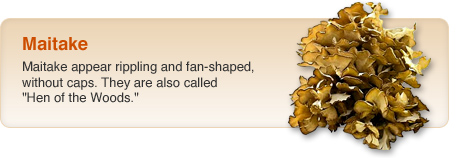
Maitake have a distinctive aroma and a rich, woodsy taste.

Preparation

Sauté lightly in butter or oil.

Uses

For a richer taste in any recipe calling for mushrooms, use maitakes. They can be a main dish ingredient or used in side dishes and soups.

Nutrition

A serving of 4-5 maitake mushrooms provides 31 calories, 0 grams of fat and 6 grams of carbohydrates, yet is a good source of the antioxidant selenium; B vitamins riboflavin, niacin and pantothenic acid; and copper. Maitake mushrooms also contain more than 2 grams of fiber, nearly 10 percent of the Daily Value.
—-

–  Flavor

They have a meaty texture and are rich and woodsy when cooked.

Preparation

Taste best when cooked.

Uses

They add a meaty flavor and texture to stir-fry, pastas, soups, entrees and sides.

Nutrition

A serving of 4-5 shiitake mushrooms provides 41 calories, 0 grams of fat and 10 grams of carbohydrates, yet is a good source of the antioxidant selenium, providing 26 percent of the Daily Value. Shiitake mushrooms are also a great source of B vitamins riboflavin, niacin and pantothenic acid; and copper.
—-

–  Flavor

They are mild tasting and crunchy.

Preparation

Before using, trim roots at cluster base. Separate stems before serving.

Uses

Try them raw in salads and sandwiches. Or use them as an ingredient in soups, such as a stock made with soy sauce and tofu.

Nutrition

A serving of 4-5 enoki mushrooms provides 37 calories, 0 grams of fat and 6 grams of carbohydrates, yet is a good source of the antioxidant selenium; B vitamins riboflavin, niacin and pantothenic acid; and copper. And enoki mushrooms have more than 300 mg of potassium per serving, an important nutrient that many Americans do not get enough of. Enoki mushrooms also contain more than 2 grams of fiber, nearly 10 percent of the Daily Value.
—-

–  Flavor

Oysters have a very delicate flavor.

Preparation

Sauté with butter and onions to bring out their flavor.

Uses

Try over linquine with sliced steak and red peppers, sprinkled with grated parmesan cheese.

Nutrition

A serving of 4-5 oyster mushrooms provides 36 calories, 0 grams of fat and 5 grams of carbohydrates, yet is a good source of B vitamins riboflavin, niacin and pantothenic acid; and copper. Oyster mushrooms also contain more than 2 grams of fiber, nearly 10 percent of the Daily Value. And oyster mushrooms have nearly 3 grams of protein, 6 percent of the Daily Value.
—-

–  Flavor

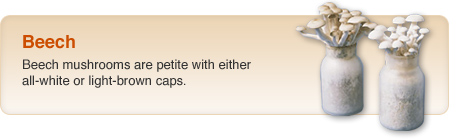
Beeches have a crunchy texture offering a delicately mild flavor that is sweet and deliciously nutty.

Preparation

Cook whole or slice into sauces to compliment chicken or fish dishes.

Uses

Great with vegetables and in stir-fry. Add to soups, stews or sauces as a last ingredient to maintain crisp texture.

Leave a comment