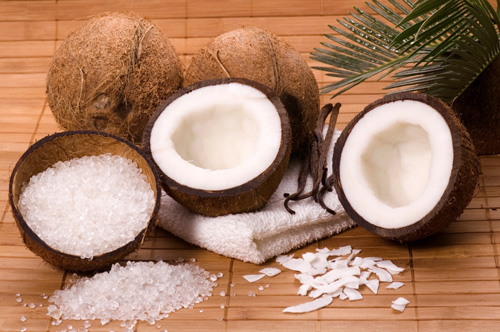
Benefits Of Coconut
(Cocos nucifera)
By Coconut Research Center
The Tree of Life
The scientific name for coconut is Cocos nucifera. Early Spanish explorers called it coco, which means “monkey face” because the three indentations (eyes) on the hairy nut resembles the head and face of a monkey. Nucifera means “nut-bearing.” The coconut provides a nutritious source of meat, juice, milk, and oil that has fed and nourished populations around the world for generations. On many islands coconut is a staple in the diet and provides the majority of the food eaten. Nearly one third of the world’s population depends on coconut to some degree for their food and their economy. Among these cultures the coconut has a long and respected history.
Coconut is highly nutritious and rich in fiber, vitamins, and minerals. It is classified as a “functional food” because it provides many health benefits beyond its nutritional content. Coconut oil is of special interest because it possesses healing properties far beyond that of any other dietary oil and is extensively used in traditional medicine among Asian and Pacific populations. Pacific Islanders consider coconut oil to be the cure for all illness. The coconut palm is so highly valued by them as both a source of food and medicine that it is called “The Tree of Life.” Only recently has modern medical science unlocked the secrets to coconut’s amazing healing powers.
Coconut In Traditional Medicine
People from many diverse cultures, languages, religions, and races scattered around the globe have revered the coconut as a valuable source of both food and medicine. Wherever the coconut palm grows the people have learned of its importance as a effective medicine. For thousands of years coconut products have held a respected and valuable place in local folk medicine. In traditional medicine around the world coconut is used to treat a wide variety of health problems including the following: abscesses, asthma, baldness, bronchitis, bruises, burns, colds, constipation, cough, dropsy, dysentery, earache, fever, flu, gingivitis, gonorrhea, irregular or painful menstruation, jaundice, kidney stones, lice, malnutrition, nausea, rash, scabies, scurvy, skin infections, sore throat, swelling, syphilis, toothache, tuberculosis, tumors, typhoid, ulcers, upset stomach, weakness, and wounds.
Coconut In Modern Medicine
Modern medical science is now confirming the use of coconut in treating many of the above conditions. Published studies in medical journals show that coconut, in one form or another, may provide a wide range of health benefits. Some of these are summarized below:
- Kills viruses that cause influenza, herpes, measles, hepatitis C, SARS, AIDS, and other illnesses.
- Kills bacteria that cause ulcers, throat infections, urinary tract infections, gum disease and cavities, pneumonia, and gonorrhea, and other diseases.
- Kills fungi and yeasts that cause candidiasis, ringworm, athlete’s foot, thrush, diaper rash, and other infections.
- Expels or kills tapeworms, lice, giardia, and other parasites.
- Provides a nutritional source of quick energy.
- Boosts energy and endurance, enhancing physical and athletic performance.
- Improves digestion and absorption of other nutrients including vitamins, minerals, and amino acids.
- Improves insulin secretion and utilization of blood glucose.
- Relieves stress on pancreas and enzyme systems of the body.
- Reduces symptoms associated with pancreatitis.
- Helps relieve symptoms and reduce health risks associated with diabetes.
- Reduces problems associated with malabsorption syndrome and cystic fibrosis.
- Improves calcium and magnesium absorption and supports the development of strong bones and teeth.
- Helps protect against osteoporosis.
- Helps relieve symptoms associated with gallbladder disease.
- Relieves symptoms associated with Crohn’s disease, ulcerative colitis, and stomach ulcers.
- Improves digestion and bowel function.
- Relieves pain and irritation caused by hemorrhoids.
- Reduces inflammation.
- Supports tissue healing and repair.
- Supports and aids immune system function.
- Helps protect the body from breast, colon, and other cancers.
- Is heart healthy; improves cholesterol ratio reducing risk of heart disease.
- Protects arteries from injury that causes atherosclerosis and thus protects against heart disease.
- Helps prevent periodontal disease and tooth decay.
- Functions as a protective antioxidant.
- Helps to protect the body from harmful free radicals that promote premature aging and degenerative disease.
- Does not deplete the body’s antioxidant reserves like other oils do.
- Improves utilization of essential fatty acids and protects them from oxidation.
- Helps relieve symptoms associated with chronic fatigue syndrome.
- Relieves symptoms associated with benign prostatic hyperplasia (prostate enlargement).
- Reduces epileptic seizures.
- Helps protect against kidney disease and bladder infections.
- Dissolves kidney stones.
- Helps prevent liver disease.
- Is lower in calories than all other fats.
- Supports thyroid function.
- Promotes loss of excess weight by increasing metabolic rate.
- Is utilized by the body to produce energy in preference to being stored as body fat like other dietary fats.
- Helps prevent obesity and overweight problems.
- Applied topically helps to form a chemical barrier on the skin to ward of infection.
- Reduces symptoms associated the psoriasis, eczema, and dermatitis.
- Supports the natural chemical balance of the skin.
- Softens skin and helps relieve dryness and flaking.
- Prevents wrinkles, sagging skin, and age spots.
- Promotes healthy looking hair and complexion.
- Provides protection from damaging effects of ultraviolet radiation from the sun.
- Helps control dandruff.
- Does not form harmful by-products when heated to normal cooking temperature like other vegetable oils do.
- Has no harmful or discomforting side effects.
- Is completely non-toxic to humans.
See Research to read some of the published studies regarding the above mentioned uses of coconut products.
Coconut Oil
While coconut possesses many health benefits due to its fiber and nutritional content, it’s the oil that makes it a truly remarkable food and medicine. Once mistakenly believed to be unhealthy because of its high saturated fat content, it is now known that the fat in coconut oil is a unique and different from most all other fats and possesses many health giving properties. It is now gaining long overdue recognition as a nutritious health food. Coconut oil has been described as “the healthiest oil on earth.” That’s quite a remarkable statement. What makes coconut oil so good? What makes it different from all other oils, especially other saturated fats? The difference is in the fat molecule. All fats and oils are composed of molecules called fatty acids. There are two methods of classifying fatty acids. The first you are probably familiar with, is based on saturation. You have saturated fats, monounsaturated fats, and polyunsaturated fats. Another system of classification is based on molecular size or length of the carbon chain within each fatty acid. Fatty acids consist of long chains of carbon atoms with hydrogen atoms attached. In this system you have short-chain fatty acids (SCFA), medium-chain fatty acids (MCFA), and long-chain fatty acids (LCFA). Coconut oil is composed predominately of medium-chain fatty acids (MCFA), also known as medium-chain triglycerides (MCT). The vast majority of fats and oils in our diets, whether they are saturated or unsaturated or come from animals or plants, are composed of long-chain fatty acids (LCFA). Some 98 to 100% of all the fatty acids you consume are LCFA. The size of the fatty acid is extremely important. Why? Because our bodies respond to and metabolize each fatty acid differently depending on its size. So the physiological effects of MCFA in coconut oil are distinctly different from those of LCFA more commonly found in our foods. The saturated fatty acids in coconut oil are predominately medium-chain fatty acids. Both the saturated and unsaturated fat found in meat, milk, eggs, and plants (including most all vegetable oils) are composed of LCFA. MCFA are very different from LCFA. They do not have a negative effect on cholesterol and help to protect against heart disease. MCFA help to lower the risk of both atherosclerosis and heart disease. It is primarily due to the MCFA in coconut oil that makes it so special and so beneficial. There are only a very few good dietary sources of MCFA. By far the best sources are from coconut and palm kernel oils. Copyright © 2004 Coconut Research Center This website is for educational purposes only. The information supplied here comes from a variety of sources and authors and not every statement made has been evaluated by the FDA. This information is not intended to diagnose, treat, cure or prevent any disease.
———-
Beauty Benefits Of Coconut Oil:
By Tipnut
Hair, Skin & Nails:
You might just put away all your expensive potions and lotions after trying coconut oil in your daily beauty regimen. It’s loaded with Vitamin E and fatty acids (such as lauric acid, myristic acid, capric acid and more) which are anti-fungal, anti-oxidizing and anti-bacterial, just the sort of stuff that our skin and hair happily respond to!
Coconut Oil Can Be Used Topically As A Beauty & Skin Treatment
It can be used as an all-over skin moisturizer (with excellent results, apply it to your skin right after showering and throughout the day as you like), but here are eight different ways you can take advantage of it’s natural goodness to treat problem areas.
I also added tips at the bottom of the page outlining what to look for when buying it and where you can find it (locally and online).
Dry & Damaged Hair:
If you have dry and damaged hair, coconut oil can help nourish it.
- Simply rub some of the oil into the damaged ends a half hour before showering.
Glossy, Shiny Hair & Frizz Buster:
- After washing, drying and styling your hair, rub a small amount of oil into the palms of your hands then lightly apply to your hair.
- If you have a problem with frizzy hair, the above treatment will also help tame it.
Exfoliating Facial Scrub:
- Mix equal parts baking soda with coconut oil and massage into face. Rinse with warm water to remove baking soda residue.
Dark Elbow Patches:
- Rub into skin each morning and night until desired results are achieved. There are other remedies.
Dry Scalp Treatment:
Each night before going to bed, follow these steps:
- Part hair one section at a time and rub coconut oil into your scalp. A light application is all you need.
- Repeat process for entire head then massage for a few minutes to really work it in. Run a wide tooth comb through your hair to comb out any tangles then put on a shower cap.
- Keep the treatment on overnight, cover your pillow with a towel just in case the cap shifts in the middle of the night.
- Wash your hair as usual in the morning.
- Repeat daily until you are satisfied with the results (may take up to 5 weeks before the dryness is gone).
Treat Rashes, Eczema, Psoriasis or Severe Dry, Cracked Skin:
- Rub a bit into affected area and allow the skin to absorb the nutrients. Treat skin daily for as long as needed.
Acne Treatment:
- Clean face as you normally would, pat dry then apply a light coating on your skin. Leave on overnight (allow skin at least 15 minutes to absorb the oil before going to bed). Repeat each night until desired results are achieved (may take some time depending on how severe the acne is).
- If you have back acne, wash and dry skin before applying the oil. Apply to skin at least 15 minutes before laying down or going to bed.
Note: Some may experience an increase in oily skin and breakouts, this can be the case for several days (even a week or two) until the skin is detoxified.
Athlete’s Foot & Nail Fungus Treatment:
- Apply twice each day to affected area covering it completely (once in the morning when you get up and once before bedtime). See more remedies for nail fungus on this page.
It’s A Food Too!
Yes, the coconut oil you are applying to your trouble spots can be eaten too! Try it as a cooking oil, in baking (replacing lard and fat) and as a spread (like butter).
Is it a super food? Metabolism booster? Diet miracle? I’m not ruling it out but there’s no definitive answer to that just yet (that I know of). Here are two resources you can review to help form your own opinion: Coconut Oil Super Powers, video series by Dr. Oz (two parts, you’ll see a link under the first video to watch the next part). Also check out this article on The Guardian which lists some pros and cons: Coco Loco.
What To Buy & Where To Find It
- Choose a pure virgin or extra-virgin coconut oil (preferably organic) which is unrefined, cold-pressed and non-hydrogenated.
- To use: It will be solid (at room temperature), heat in a hot water bath for a couple minutes (scoop a spoonful into a small glass bowl that’s resting in hot water) or rub a bit between your hands to soften and warm it up a bit before applying.
- How much to use: A little goes a long way! You don’t need to glob it on, apply in light layers so your skin absorbs it readily.
- Where to buy it: Try your local pharmacy, health food store, online at shops like Amazon or pharmacy sites. This stuff is surprisingly inexpensive considering all the benefits it has to offer!
- How to store it: Keep it sealed in its original container in a cool, dark place (unrefrigerated). It has a shelf life of about 2 years.
- Note: If you are allergic to coconut, chances are you’re not going to have a good experience using it topically. Your best bet is to not use it as a beauty treatment to avoid any physical reactions an allergy may trigger.
———-
Benefits Of Coconut Water
By GBC News
Coconuts are the fruit of the coconut palm, botanically known as Cocos nucifera. Coconut water only comes from young green coconuts, it is one of the best natural drinks. The coconut is known for being a light moisturizer that also decreases excessive oil on the skin, which could make it beneficial for smoothing out combination skin as well.
There are many ways to integrate coconut into an everyday beauty regimen. Using coconut water, coconut pulp, coconut oil and coconut cream are all ways to easily utilize coconut for beauty purposes. Coconut water contains organic compounds possessing healthy growth promoting properties that have been known to help.
– Coconut water is the water found inside of a fresh coconut. The coconut is known for being a light moisturizer that also decreases excessive oil on the skin, which could make it beneficial for smoothing out combination skin as well. Add this water to a bath, or mix it with liquid shower gel. It could also be added to lotion as well as hair conditioner or shampoo for oily hair.
– This natural water is best for acne and blackheads also. This is a natural toning and leansing mask for oily skin.
– Coconut water works as reliable herbal medicine and as mild antidote for multiple problems like diabetes, urethral stone, kidney malfunctioning; its regular consumption improves HDL in human body and controls the intensity of urinary bladder problem naturally. Regular consumption of coconut water reduces the risk of cancer infliction in body.
– Coconut water is a rich source of natural fiber, natural calcium, magnesium, and natural potassium- making it a healthy electrolyte drink; it contains lesser amount of sodium, negligible amount of cholesterol.
– Regular consumption of coconut water helps in improvement of blood circulation also.
– Coconut water is anti-viral, anti-fungal and anti-microbial.
– Coconut water is an efficient natural remedy for controlling the intensity of acid reflux; it is good natural antidote for heart burn problem.
– Regular consumption of coconut water helps in digestion: slow sipping of coconut water after main meal helps in curing this digestive discomfort. The lauric acid in coconuts is also used to heal digestive tract disorders such as Leaky Gut Syndrome.
– Drinking coconut water for infants are effective for natural treatment of intestinal worms. Coconut water consumption aids in natural destruction for intestinal worms and it is safe for children to administer this herbal remedy on them.
– Coconut water contains natural albumen, thus it is perfect natural SOS drink for cholera affected patients.
Source: bitterrootrestoration.com
———-
Benefits of Coconut Milk
By Dr. Granny
Coconut milk is extracted by grating mature coconuts and squeezing them by using cheesecloth or both bare hands. This milky white liquid is called santam in Malaysia, Brunei and Indonesia, and gata in Philippines. It is used in several food recipes like sauces, delicious curries and desserts. Apart from making foods tastier and creamier, coconut milk is also a healthy addition to various food preparations.
Nutritional Values of Coconut Milk:
Following are the nutritional values present in 100 grams of fresh coconut milk:
- Calories – 230
- Proteins – 2.3g
- Fat – 23.8g
- Carbohydrates – 5.5g
- Dietary fiber – 2.3g
- Sugar – 3.35g
- Vitamin C – 2.8 mg
- Vitamin E – 0.15 mg
- Vitamin B1 – 0.026 mg
- Vitamin B6 – 0.033 mg
- Vitamin B5 (Pantothenic acid) – 0.183 mg
- Folate – 16 mcg
- Vitamin B3 (Niacin) – 0.76 mg
- Iron – 1.64 mg
- Selenium – 6.2 mcg
- Sodium – 15 mg
- Calcium – 16 mg
- Magnesium – 37 mg
- Phosphorus – 100 mg
- Potassium – 260 mg
Following are some of the health benefits of coconut milk:
-
Helps to maintain blood sugar places:
Glucose intolerance may cause manganese deficiency in your body. Coconut milk is a rich source of manganese. Whole grains, legumes and nuts are some other excellent sources of manganese.
-
Keeps skin and blood vessels flexible and elastic:
Copper is a very important mineral for most of the bodily functions. Copper and vitamin C help to maintain the flexibility and elasticity of the skin and blood vessels.
-
Aids in building strong bones:
Coconut milk is not rich in calcium, but it is rich in phosphorus. Phosphorus is an essential nutrient that the body needs for strengthening bones. It is must to take phosphorus with calcium particularly to prevent bone loss because it supplies phosphate to the body.
-
Helps to prevent anemia:
Lack of iron is the most common nutrient deficiency among the people throughout the world. Iron deficiency in body does not allow the body to develop enough hemoglobin for keeping sufficient oxygen levels in red blood cells, resulting in anemia. Each cup of coconut milk supplies the body with nearly a quarter of daily value of iron.
-
Relaxes muscles and nerves:
Whenever you feel muscle cramps or muscle soreness, have some food along with coconut milk. It is rich in magnesium and can help you in relieving the problem. One of the functions of magnesium is it acts as a gate block in many nerve cells. If magnesium is not present in body, nerve cells become very active because of calcium that activates nerves. Excess contraction of muscles is caused by over-active nerve cells.
-
Helps in Controlling Weight:
This can be good news for people who are trying to reduce weight. Coconut milk makes you feel full very quickly because of high concentrations of dietary fiber.
-
Decreases the risk of joint inflammation:
Selenium is an important antioxidant. It controls the free radicals and thereby helps in relieving the symptoms of arthritis. It is observed that people with low levels of selenium may suffer from rheumatoid arthritis.
-
Helps in lowering high blood pressure:
People who are concerned about their blood pressure will not face any problem consuming foods containing potassium. Potassium helps in lowering blood pressure levels in the body.
-
Helps in maintaining healthy immune system:
Coconut milk helps in warding off colds and coughs by keeping the immune system healthy. It supplies vitamin C to the body which boosts the immune system.
-
Promotes the health of prostate gland:
Zinc plays a vital role in promoting the health of prostate gland. A preliminary study showed that it slows down the activities of cancer cells.
I hope the above mentioned information helps you in understanding the relation between health and coconut milk. It can also be consumed by people with cow’s milk allergy. It is free from gluten and soy. Hence people who are allergic to these substances can also use coconut milk.
 FIT ~an~ HAPPY